
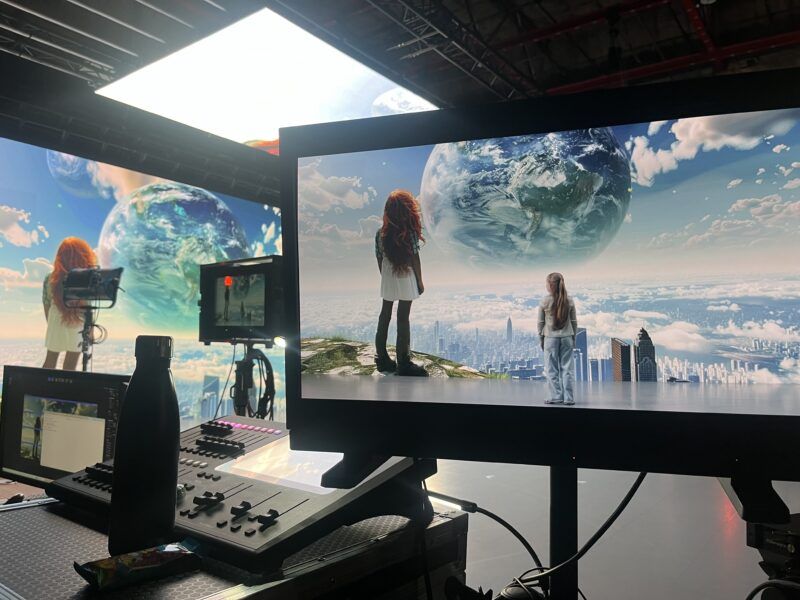
Technology has shifted film production from a location-bound process to a controlled, adaptable studio environment. Crews no longer depend solely on distant landscapes, unpredictable weather, or extended travel schedules. Instead, productions build entire worlds inside sound stages using real-time rendering, LED volumes, and advanced game engines.
This shift does not replace creativity. It expands it. Directors visualise complex scenes before cameras roll, cinematographers adjust lighting against digital skies in real time, production designers collaborate with 3D artists to refine environments instantly. The result is a workflow that feels faster, more precise, and far more flexible than traditional methods.
The Shift from Traditional Sets to Virtual Environments
Physical location shoots once defined large-scale filmmaking. They brought authenticity, yet they also introduced logistical strain. Travel costs escalated, weather delayed schedules, and transporting crew across continents inflated carbon footprints.
LED volume stages now allow productions to display photorealistic environments on high-resolution walls that respond to camera movement. When paired with Unreal Engine, these environments render in real time, adjusting perspective as the camera tracks. This creates natural parallax, accurate lighting reflections, and immersive depth.
Rather than relying on green screens, actors perform within visible environments. Directors frame shots with confidence, cinematographers fine-tune lighting without extensive post-production adjustments, producers maintain tighter schedules. The studio becomes an ecosystem where digital and physical elements coexist seamlessly.
Why Film Studio Hire Is Evolving
Film Studio Hire once meant securing space, lighting rigs, and basic infrastructure. Today, it often includes access to virtual production pipelines, integrated control rooms, real-time rendering systems, and technical specialists who operate them.
Studios now function as fully equipped production hubs. Teams combine LED volumes, motion tracking systems, and on-site VFX supervision within a single location. This integration reduces delays between departments, encourages experimentation, and shortens post-production timelines.
Sustainability also shapes modern Film Studio Hire decisions. Virtual environments replace international travel for many scenes, cutting freight transport, reducing set waste, and limiting energy-intensive builds. Productions gain creative freedom without absorbing the environmental cost traditionally attached to large-scale shoots.
The Role of Creative Technology in Modern Storytelling
Real-time technology reshapes storytelling long before cameras roll. Pre-production teams use Lidar scanning to capture real-world locations with remarkable accuracy. Photogrammetry converts physical objects into digital assets, preserving texture and scale. AI tools assist with rapid environment generation, previs development, and asset optimisation.
Virtual art departments bring directors, designers, and VFX supervisors together in shared digital spaces. Teams review environments in real time, adjust lighting, alter architecture, and test camera movement before stepping onto the stage. This collaborative process strengthens creative decisions at an early stage, reducing costly revisions later.
On set, physical props blend with digital backdrops, creating convincing hybrids that feel grounded. Reflections, shadows, and ambient light respond naturally, eliminating the artificial feel often associated with earlier compositing techniques. Audiences experience seamless worlds, not technical processes.
What This Means for Film Production Companies in London
Film Production Companies in London operate in one of the world’s most competitive creative markets. Access to advanced studio infrastructure allows them to compete on capability rather than scale alone.
High-end virtual production tools, once reserved for major studio features, now support commercials, branded content, episodic television, and social campaigns. Agencies expect cinematic quality at pace, brands demand efficiency, producers require flexible solutions. Virtual stages meet these expectations without inflating budgets.
Studios such as Quite Brilliant, based at Twickenham Film Studios, integrate LED volume production, XR shooting, creative consultancy, and post-production expertise within a single facility . This consolidation reduces friction between departments, streamlines communication, supports ambitious creative briefs without expanding crew size unnecessarily.
Recognition across the industry reflects this shift. The 2023 APA award for Best Use of Virtual Production highlights how technology-driven workflows now shape mainstream advertising and branded storytelling.
Sustainability and the Future of Production
Environmental responsibility now influences production planning as much as budget or schedule. Virtual production addresses several long-standing challenges.
- Reduced travel for cast and crew
- Lower freight requirements for set construction
- Fewer disposable builds
- Shorter production timelines
By capturing multiple locations within a single stage, teams minimise transport emissions and material waste. Real-time visualisation tools also improve planning accuracy, allowing departments to test concepts digitally before committing physical resources.
This approach aligns innovation with responsibility. Production remains ambitious, yet its footprint shrinks.
The Future of Film Studio Hire in a Tech-Driven Industry
Hybrid productions are becoming standard practice. Crews combine practical sets with digital extensions, location plates with virtual skies, physical props with real-time rendered environments. Film Studio Hire increasingly centres on access to these integrated systems rather than square footage alone.
The same technology now supports advertising campaigns, music videos, corporate communications, and live broadcasts. As demand grows, studios refine workflows, invest in new hardware, expand technical expertise. Early adopters gain operational fluency that strengthens client confidence.
Film production has always adapted to technological change. From analogue film to digital cameras, from practical effects to CGI, each shift has redefined possibility. Real-time virtual production marks another decisive moment. It offers control without constraint, efficiency without compromise, creativity without geographic limits.
Technology continues to reshape production workflows beyond the studio floor. Distribution platforms demand faster delivery, higher output volumes, consistent quality across formats. Real-time pipelines support these expectations by reducing the gap between production and post.
Editors can access pre-visualised shots that already reflect final lighting conditions. VFX teams receive cleaner plates with accurate reflections and interactive light, which reduces corrective work. Producers gain clearer oversight of progress during shooting rather than waiting until weeks later to assess results. This transparency strengthens creative control across the entire schedule.
Studios that integrate production and post-production services under one roof strengthen this advantage. Virtual production stages, creative development teams, and VFX supervision working in proximity create continuity from concept through final delivery. That continuity saves time, supports experimentation, and protects quality standards.
Creative Confidence Through Real-Time Decision Making
One of the most significant shifts lies in decision-making speed. Directors can adjust background environments live during filming rather than requesting changes in post. Producers evaluate alternative settings in minutes rather than organising additional location days. Cinematographers refine lighting setups with immediate visual feedback from digital skies or cityscapes.
This immediacy changes the tone of a set. Teams collaborate around a shared visual reference instead of imagining future compositing. Actors respond to visible environments, which strengthens performance authenticity. Departments align more naturally, reducing misunderstandings between creative and technical teams.
Real-time production also supports experimentation. A sunrise can become twilight without dismantling a set. A desert horizon can transform into a futuristic skyline. These changes require technical expertise, yet they no longer demand weeks of rework.
Expanding Access to High-End Production
Virtual production once belonged exclusively to large-scale feature films. Hardware costs, software complexity, and specialist knowledge restricted access. That barrier has lowered.
Studios offering advanced Film Studio Hire packages now make LED volume stages, motion tracking systems, and real-time rendering available to a wider range of budgets. Commercial directors, independent filmmakers, and branded content producers can access tools previously limited to blockbuster franchises.
This accessibility supports creative ambition across industries. Brands launch campaigns with cinematic scale. Television dramas maintain consistent production value across seasons. Digital-first content benefits from studio-level polish without disproportionate cost.
A New Competitive Standard
Technology has become a benchmark rather than a novelty. Clients expect efficiency, sustainability, visual quality, and technical competence as standard requirements. Studios that combine innovation with collaborative support position themselves strongly within this environment.
The industry recognises that virtual production does not replace traditional craftsmanship. It enhances it. Lighting design, cinematography, performance, art direction, and storytelling remain central. Technology supports these disciplines by providing precision, predictability, and creative range.
Film production has entered a period where physical boundaries matter less. Geography no longer restricts location choice. Weather no longer dictates schedules. Scale no longer depends solely on budget. Studios that integrate advanced systems with experienced teams define this new chapter.
The industry will continue refining these tools, expanding their application, and raising expectations. What remains constant is the pursuit of compelling stories. Technology simply provides a more agile stage on which to tell them.
Technology’s influence extends into training, talent development, and long-term industry growth. Crews now build hybrid skill sets that combine traditional filmmaking knowledge with real-time engine operation, motion tracking calibration, and digital asset management. This blend of disciplines strengthens production resilience, reduces dependency on fragmented workflows, and supports smoother collaboration between creative and technical teams.
Studios investing in virtual production infrastructure also invest in people. Operators, Unreal technicians, virtual art department specialists, and on-set VFX supervisors work alongside cinematographers, gaffers, designers, and producers. That proximity builds shared understanding rather than siloed expertise. Over time, this culture of integration sharpens efficiency and raises production standards across the board.
Beyond Film and Television
The technology reshaping cinema now supports a much wider range of content. Advertising campaigns rely on immersive backdrops that adapt instantly to product changes. Automotive brands present vehicles in environments that would otherwise demand international travel. Fashion labels stage seasonal launches inside fully controllable digital settings. Live broadcast events integrate extended reality graphics that respond to presenter movement in real time.
This expansion strengthens demand for advanced Film Studio Hire facilities equipped to handle multi-format production. Clients seek flexible spaces that accommodate broadcast, digital, branded, and cinematic output without rebuilding infrastructure for each project. Studios that anticipate this need design stages capable of rapid reconfiguration, seamless camera tracking, high-resolution LED playback, and integrated control systems.
Precision Planning Reduces Risk
Production budgets face increasing scrutiny. Investors expect reliability. Agencies demand predictable delivery schedules. Real-time visualisation tools reduce uncertainty before significant resources are committed.
Directors preview complex sequences during pre-production, producers confirm technical feasibility early, cinematographers test lensing against digital environments before shoot days begin. This level of preparation strengthens decision-making and protects financial planning. Fewer surprises emerge during principal photography, which reduces overtime, reshoots, and unnecessary expenditure.
Studios that combine consultancy, creative development, and stage hire within one facility support this process from the earliest concept stages . That continuity allows production teams to move from idea to execution without losing clarity or momentum.
A Permanent Industry Shift
Film production has absorbed many technological shifts across its history, yet real-time virtual production stands apart due to its integration across every stage of workflow. It influences concept design, previsualisation, principal photography, post-production, and delivery. It strengthens sustainability goals, supports creative ambition, and reduces logistical strain.
Film Studio Hire now represents access to technical ecosystems rather than empty floor space. Producers evaluate stage specifications alongside rendering capability, tracking precision, on-site expertise, and post-production integration. Competitive advantage increasingly depends on how effectively a studio unites these elements.
The production industry will continue advancing as hardware improves, rendering speeds increase, and software capabilities expand. What defines success is not simply access to technology, but the ability to use it confidently, creatively, responsibly.
The reshaping of film production is not a temporary adjustment. It marks a structural evolution in how stories move from concept to screen. Studios that embrace this shift set new standards for efficiency, sustainability, and creative possibility.
The commercial impact of this shift reaches beyond production crews. Agencies, brands, and broadcasters now build campaigns around capabilities that did not exist a decade ago. Creative concepts increasingly assume access to real-time environments, controlled lighting conditions, rapid iteration, seamless integration between physical and digital elements.
This expectation changes early-stage conversations. Rather than limiting ambition to logistical feasibility, teams begin with visual potential. If a concept requires a remote mountain range at sunrise, a futuristic skyline at dusk, or a stylised abstract world with shifting light, those environments can exist within a single controlled stage.
Collaboration Becomes More Direct
Virtual production encourages closer collaboration between departments that once operated sequentially. Art direction no longer hands over static designs for later adaptation. Instead, digital environments evolve in partnership with cinematography, lighting, and VFX from the outset.
Producers monitor live renders as scenes unfold. Agencies review near-final visuals during shooting days. Clients respond to tangible results rather than abstract descriptions. This transparency builds trust, reduces revision cycles, and strengthens creative alignment.
Studios built around this model place collaboration at the centre of their offering. Integrated virtual production, consultancy services, and post-production support operate in tandem . That structure encourages open communication between technical teams, directors, agencies, and brand stakeholders.
Efficiency Without Creative Compromise
Efficiency once carried a risk of creative limitation. Tighter schedules often meant simplified visuals or reduced experimentation. Real-time technology reverses that assumption.
Directors test multiple environment variations without resetting physical sets. Lighting teams adapt digital skies to enhance mood. Producers compress timelines without sacrificing visual ambition. The studio becomes a responsive space where creative changes occur in minutes rather than days.
This flexibility supports sustainable practice as well. Fewer location moves reduce transport emissions. Digital set extensions limit physical build waste. Controlled studio conditions reduce unpredictable delays that typically extend shoot durations.
Redefining Industry Standards
The film production industry has entered a phase where advanced technology defines baseline expectation. LED volumes, XR stages, real-time rendering engines, and virtual art departments no longer represent experimental additions. They form part of the operational foundation for forward-thinking studios.
Clients increasingly evaluate facilities based on integrated capability. They assess technical infrastructure, sustainability credentials, creative support, and post-production continuity in equal measure. Film Studio Hire decisions now reflect long-term production strategy rather than short-term space requirements.
This shift strengthens the role of studios that invest early, refine workflows consistently, and maintain strong creative partnerships. It also supports London’s position as a global production hub, where innovation sits alongside established filmmaking heritage.
Technology continues to reshape how stories reach the screen. What remains constant is the demand for clarity, creativity, and collaboration. The tools may evolve, yet the ambition to produce compelling, visually powerful work remains unchanged.